


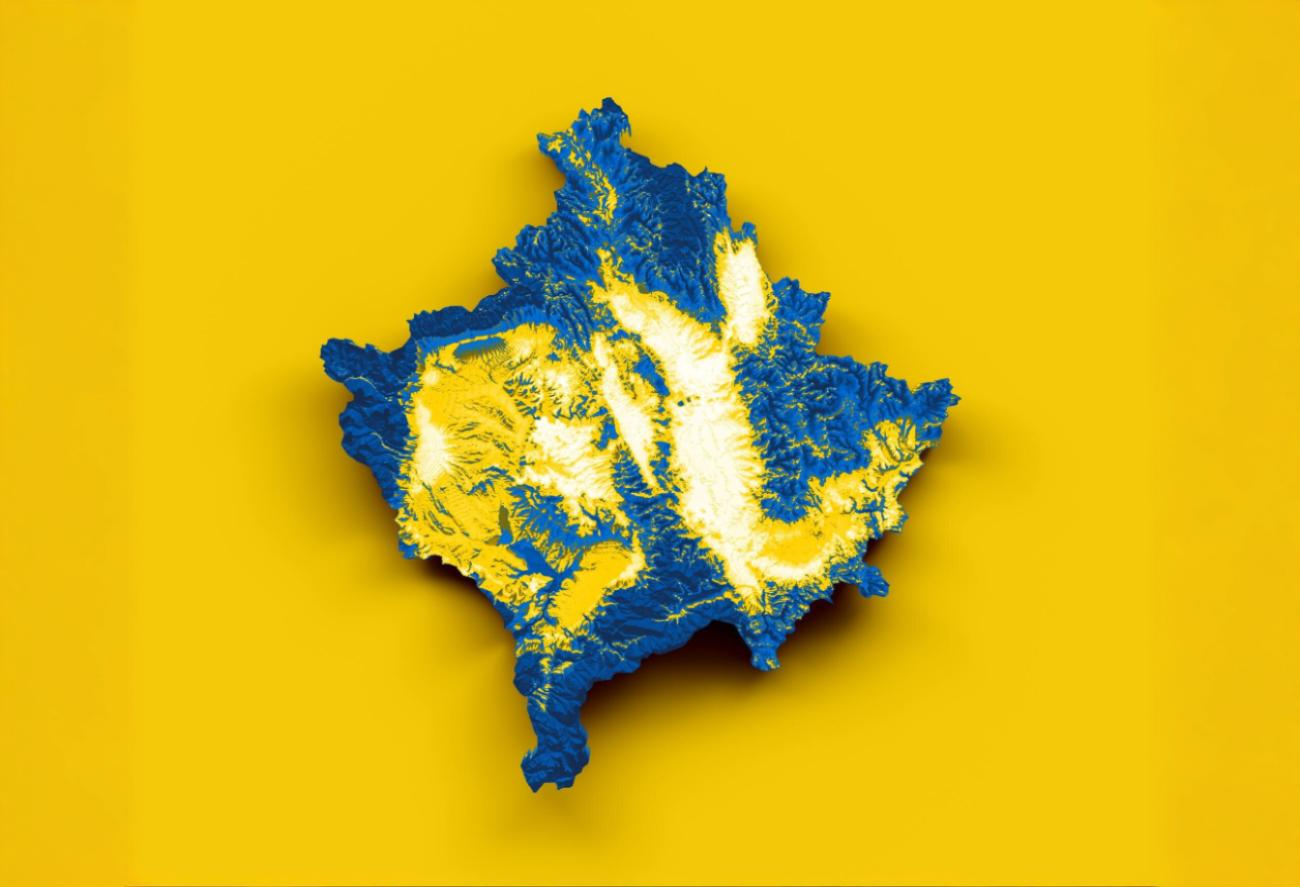
Resilience, Stability, and Sustained Growth[1]
A Macroeconomic Outperformer
While many European economies face stagnation, Kosovo has demonstrated remarkable resilience. Driven by domestic consumption, diaspora investment, and a rapidly expanding export sector, the country has maintained a GDP growth rate consistently outperforming the regional average.
With a fiscal policy praised by the IMF for its prudence and a banking sector that remains liquid and profitable, Kosovo offers a low-risk, high-growth environment for foreign capital.
Key Economic Indicators
-
GDP Real Growth (2023): 4.1% (vs. Eurozone average of <1%)[2]
-
GDP Per Capita (2023): € 6,101
-
Sovereign Credit Rating: BB- (Stable) (Fitch Ratings – First-time assignment, signaling distinct creditworthiness)[3]
GDP Growth Trajectory (2016–2024)
A decade of upward momentum.[3]
(Graphic Placeholder: Bar Chart)
Imagine a bar chart here showing a steady upward trend, dipping only during the 2020 global pandemic, and rebounding sharply with >10% growth in 2021 and stabilizing at ~4% in 2023/2024.
Analyst Note: The World Bank and IMF project Kosovo to maintain a growth trajectory of approximately 3.8% – 4.2% through 2026, driven by public infrastructure investment and the energy transition.
Global Trade Access: A Borderless Market
Duty-Free Access to 600+ Million Consumers[3]
Kosovo’s trade policy is aggressively open.[4] Through a network of strategic Free Trade Agreements (FTAs), manufacturers in Kosovo can export to the world’s wealthiest markets with 0% Customs Duties.
1. European Union (The SAA Anchor)
-
Agreement: Stabilization and Association Agreement (SAA).
-
Benefit: Guaranteed tariff-free access to the EU Single Market.
-
Status: Active & Implemented.
2. EFTA States (The Premium Market)
-
Agreement: Free Trade Agreement with EFTA (Switzerland, Norway, Iceland, Liechtenstein).[4][5][6]
-
Benefit: Unlocks the wealthiest consumer markets in Europe.
-
Status: SIGNED (January 2025). A major milestone for export competitiveness.
3. Regional & Global Partners
-
CEFTA: Duty-free trade with Albania, North Macedonia, Montenegro, Serbia, Bosnia & Herzegovina, and Moldova.[5]
-
Turkey: Free Trade Agreement (Ratified) – Removing tariffs on industrial goods.
-
United States: Generalized System of Preferences (GSP) – Duty-free access for thousands of Kosovan products.
-
Japan & Norway: Preferential GSP Trade Programs.