


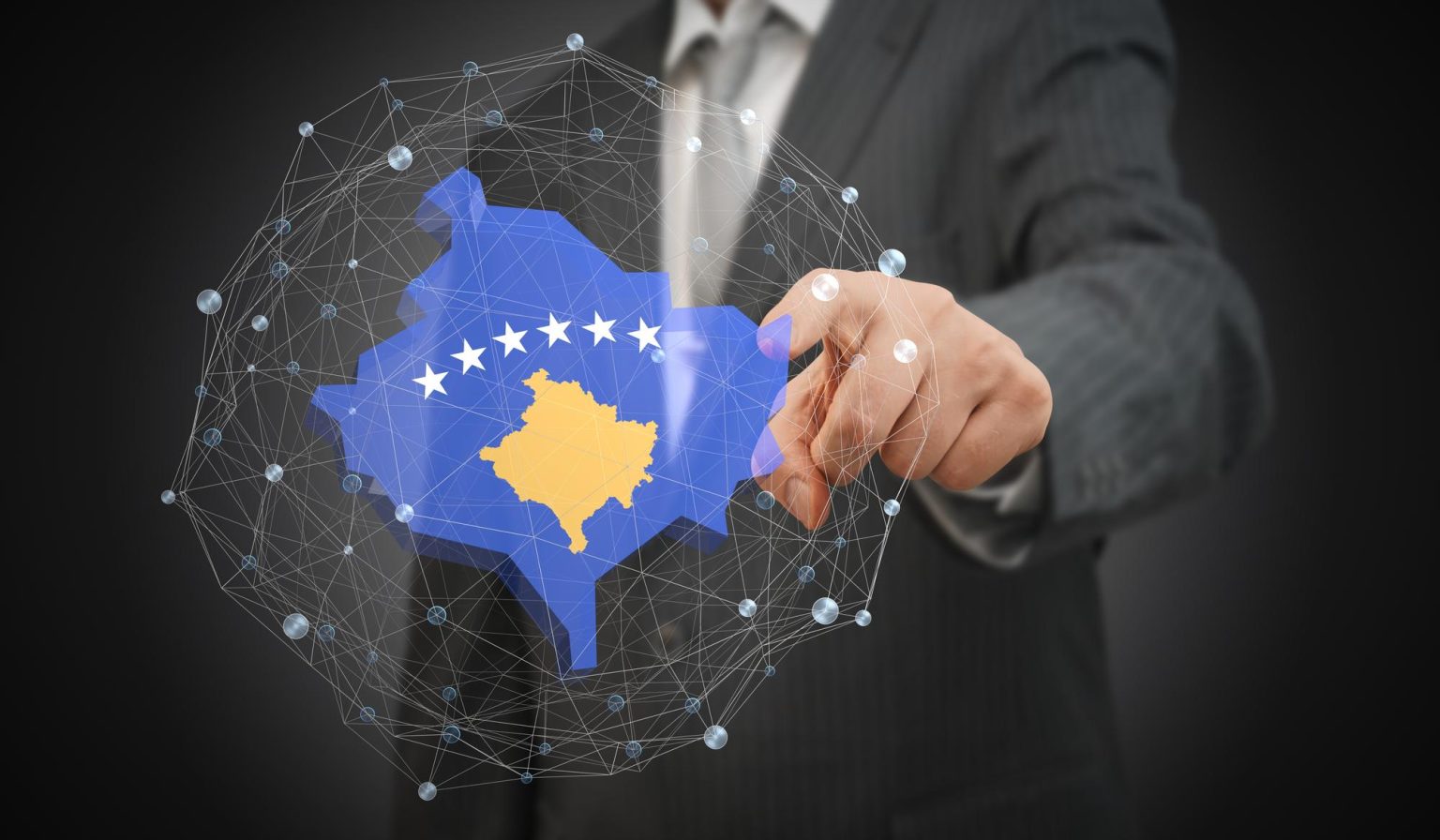
At a Glance: The Engine of the Western Balkans
Official Name: Republic of Kosovo
Capital: Pristina (The political, cultural, and university hub)
Currency: Euro (€) – Unilaterally adopted for maximum monetary stability.
Time Zone: Central European Time (CET/CEST) – Same as Berlin, Paris, Zurich.
01. Demographics & Human Capital
Europe’s Vitality Hub
Kosovo is defined by its energy. It is home to the youngest population on the continent, creating a dynamic labor market eager for innovation.
-
Population: ~1.58 Million (Source: 2024 Census Preliminary Results).
-
Diaspora: An estimated 800,000+ Kosovars live in the DACH region (Germany, Switzerland, Austria), driving strong economic and cultural ties.
-
Languages:
-
Official: Albanian, Serbian.
-
Business: English is widely spoken among the youth and professional class. German is the second most common foreign language due to diaspora connections.
-
-
Urbanization: Rapidly urbanizing, with 42% living in urban centers and a modernizing rural landscape.
02. Economic Indicators (2024/2025 Outlook)
Macroeconomic Stability
-
GDP Real Growth: ~4.0% – 4.2% (Consistent outperformer in the region).
-
GDP Per Capita: ~€ 6,100+ (Steadily rising purchasing power).
-
National Budget: > € 3.6 Billion (2025).
-
Sovereign Credit Rating: BB- (Fitch Ratings).
03. Digital Infrastructure & Connectivity
A Fully Digital Nation
Forget the stereotypes—Kosovo is more connected than many EU states. It boasts one of the highest internet penetration rates in Europe.
-
Internet Penetration: 100% of households and settlements are covered by broadband/fiber optics.
-
Mobile Network: Full 4G/LTE coverage with rapidly expanding 5G infrastructure.
-
Providers: Leading operators include IPKO (Slovenian Telecom Group) and Vala (Public), offering competitive roaming packages across the Western Balkans and EU.
04. Financial Ecosystem
Safe, Liquid, and European
Kosovo runs on the Euro, meaning zero exchange rate risk for European investors.
-
Banking: A robust two-tier system regulated by the Central Bank of Kosovo (CBK). The sector is dominated by foreign capital (Raiffeisen Bank, ProCredit Bank, NLB, TEB), ensuring high liquidity and safety.
-
Insurance & Pensions: A fully regulated market with 15 insurance companies and a sustainable two-pillar pension system.
05. The Legal Framework
Constitutional Protection for Investors
Since declaring independence on February 17, 2008, Kosovo has built a legal system based on EU Standards.
-
Transparency: All laws are published in the Official Gazette in Albanian, Serbian, and English. (Accessible at: gzk.rks-gov.net)
-
Asset Security: The constitution guarantees the protection of property and forbids discriminatory treatment of foreign investors.
-
Visa Liberalization: Since January 1, 2024, Kosovar citizens travel visa-free to the EU Schengen zone, simplifying business travel and logistics.
06. Taxation & Customs (The Competitive Edge)
Simple. Flat. Low.
-
Corporate Tax: 10%
-
Dividend Tax: 0%
-
Customs Duties:
-
0% on Capital Goods / Machinery.
-
0% on Raw Materials.
-
0% on Exports.
-
-
VAT: 18% Standard / 8% Reduced (Food/Utilities).
07. Labor Market
High Skills, Competitive Costs
Kosovo offers a high-quality workforce at a fraction of Western European costs.
-
Average Net Wage: € 500 – € 700 (varies by sector, 2024 estimates).
-
Key Advantage: A multilingual workforce with strong affinity for Western work culture, particularly suitable for BPO, ICT, and Manufacturing.
08. Investment Opportunities (Privatization)
Unlocking Value
The Privatization Agency of Kosovo (PAK) and the newly established Sovereign Fund manage a vast portfolio of socially owned enterprises and assets.
-
Status: Hundreds of assets (land, industrial sites, warehouses) are available for liquidation or long-term lease, offering prime real estate for industrial parks and manufacturing facilities.
09. Quality of Life
Modern Living
-
Healthcare: A dual system with 6 regional public hospitals and a booming private sector (American Hospital, various specialized clinics).
-
Safety: Kosovo is ranked as one of the safest countries in the Balkans.
-
Lifestyle: A vibrant “coffee culture,” thriving nightlife in Pristina, and world-class mountain tourism (skiing/hiking) in Brezovica and Rugova.